Speech Therapy · Ages 3–12 · Now enrolling
Neurodiversity-affirming speech and language therapy
Communication begins with regulation and connection.We honor each child's unique communication style, recognize their individual strengths, and support the sensory and regulation needs that shape how they engage, communicate, and learn.
Our goal is to help children feel safe, regulated, understood, and empowered to communicate in ways that are meaningful and authentic to them.
Our approach
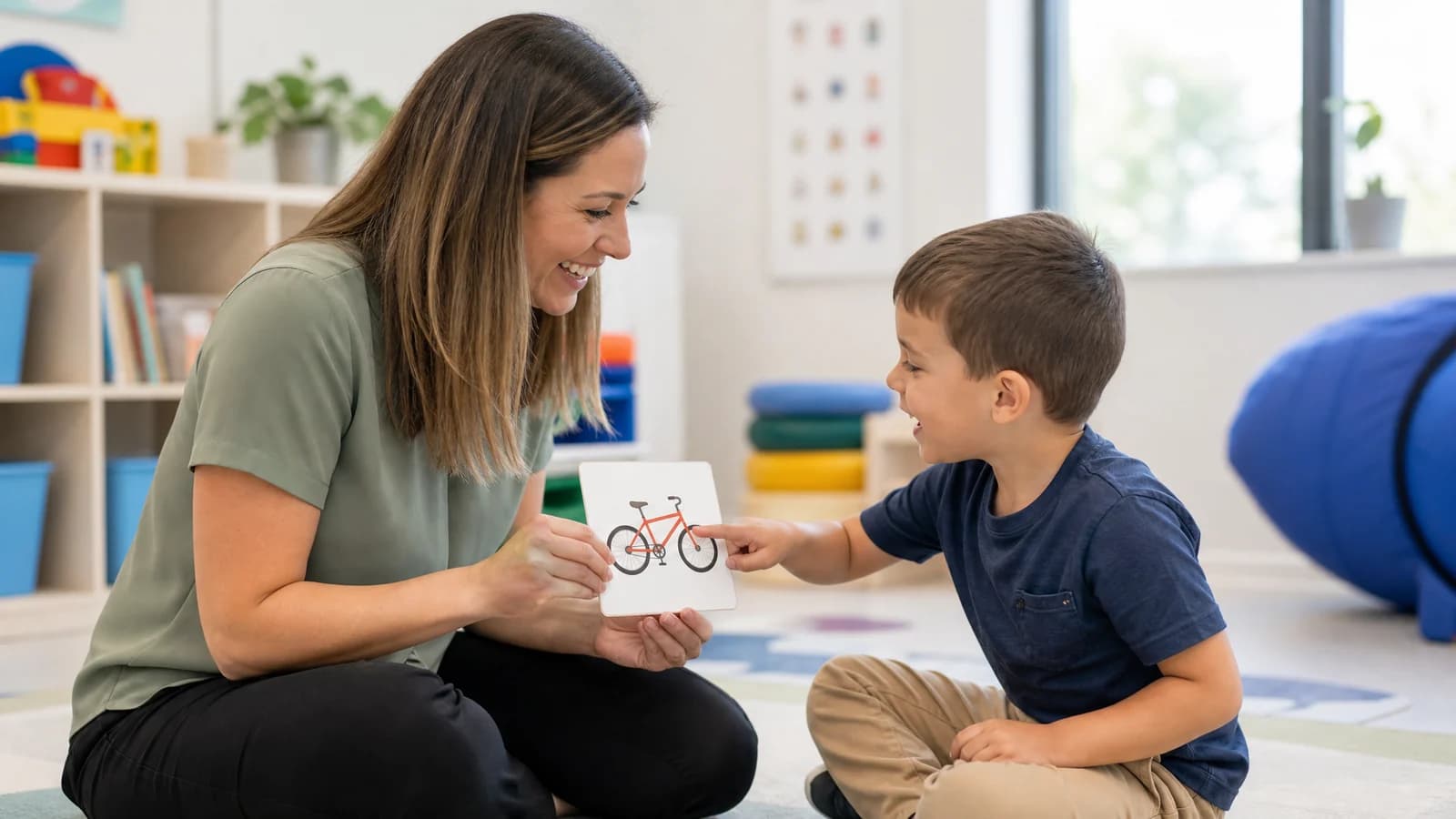
We treat the whole child, not an isolated skill
We believe regulation creates the foundation for engagement, communication, cognition, and higher-level learning. Rather than drilling speech or language skills in isolation, therapy considers everything that shapes how a child shows up:
- Sensory needs
- Emotional regulation
- Attention and engagement
- Communication preferences
- Learning environment
- Individual interests and strengths
Therapy is playful, functional, and individualized. We use movement, sensory experiences, meaningful activities, connection, and fun to create natural opportunities for communication and learning.
Our therapy framework
Regulation comes first, everything else follows
Children communicate and learn best when they feel physically and emotionally safe. Each stage makes the next one possible.
Regulation
The child feels physically and emotionally safe and has access to the sensory and environmental supports they need.
Engagement and Connection
The child is interested, connected, and available for shared interaction and learning.
Communication and Cognition
The child develops reliable ways to communicate needs, preferences, ideas, emotions, and experiences while building attention, understanding, memory, and problem-solving skills.
Language Development
The child expands receptive, expressive, and social communication skills using their preferred forms of communication.
Higher-Level Cognitive-Language Skills
As the child is ready, therapy supports problem-solving, flexible thinking, self-advocacy, perspective-taking, organization, planning, inferencing, emotional awareness, and the executive functioning that underpins communication.
Specialized areas of focus
Where our training goes deep
These are the areas families travel for, led by a clinician with advanced training in each.
Neurodiversity-Affirming Autism Support
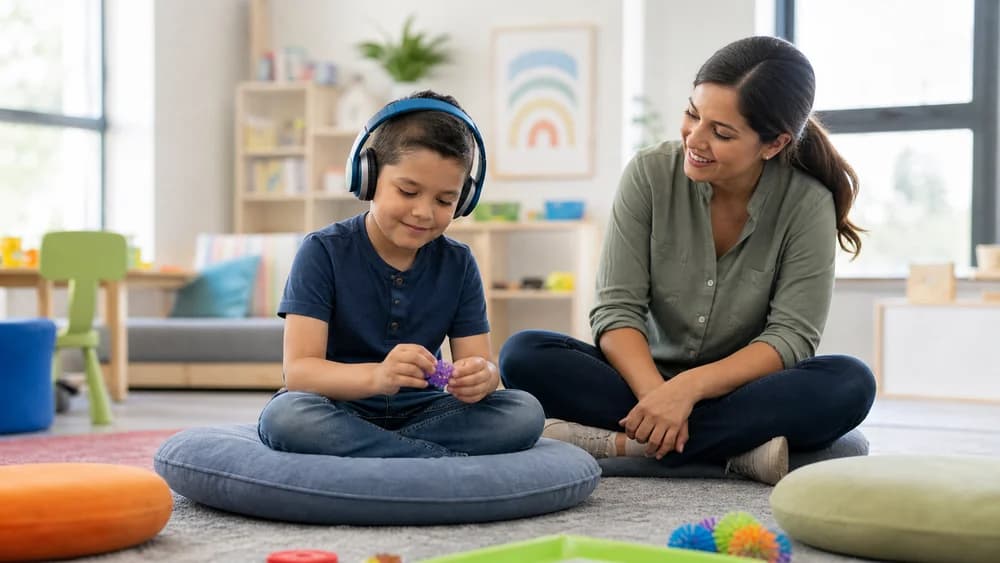
We provide affirming therapy that respects autistic communication, sensory preferences, interests, and ways of interacting with the world. Therapy supports meaningful communication, participation, self-advocacy, and connection without attempting to eliminate harmless autistic traits or make a child appear more neurotypical.

Total Communication
All forms of communication are valuable. The goal is never to prioritize one over another, it is to help each child communicate effectively, comfortably, and authentically. Depending on the child, that may include:
- Spoken language
- Gestures
- Facial expressions and body language
- Sign language
- Pictures and visual supports
- Augmentative and Alternative Communication (AAC)
- Scripted or gestalt language
Gestalt Language Processing
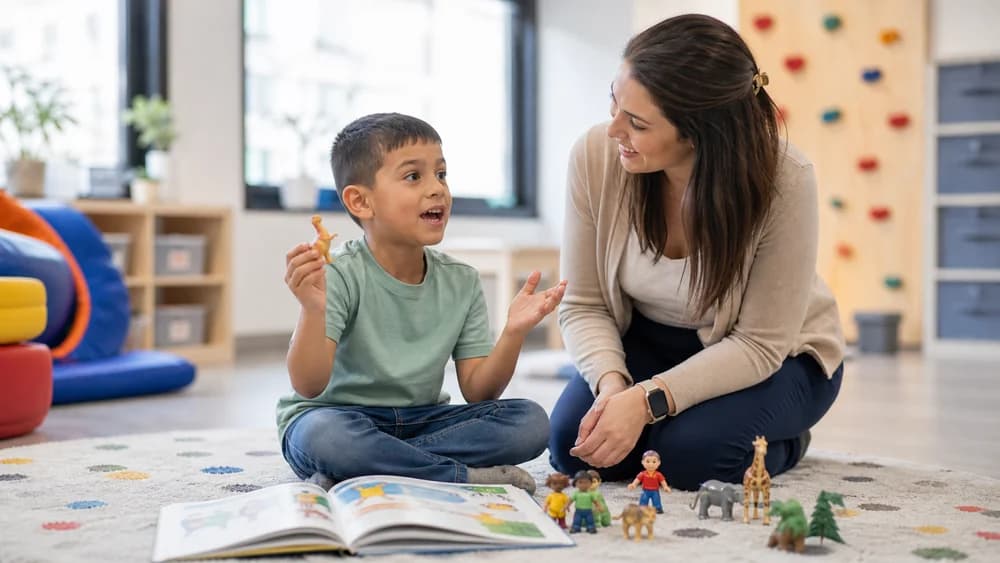
We support children who communicate through echolalia, scripts, or longer language chunks. Therapy incorporates the principles of Natural Language Acquisition while honoring the child's current language as meaningful communication, and is designed to support the development of flexible, self-generated language.
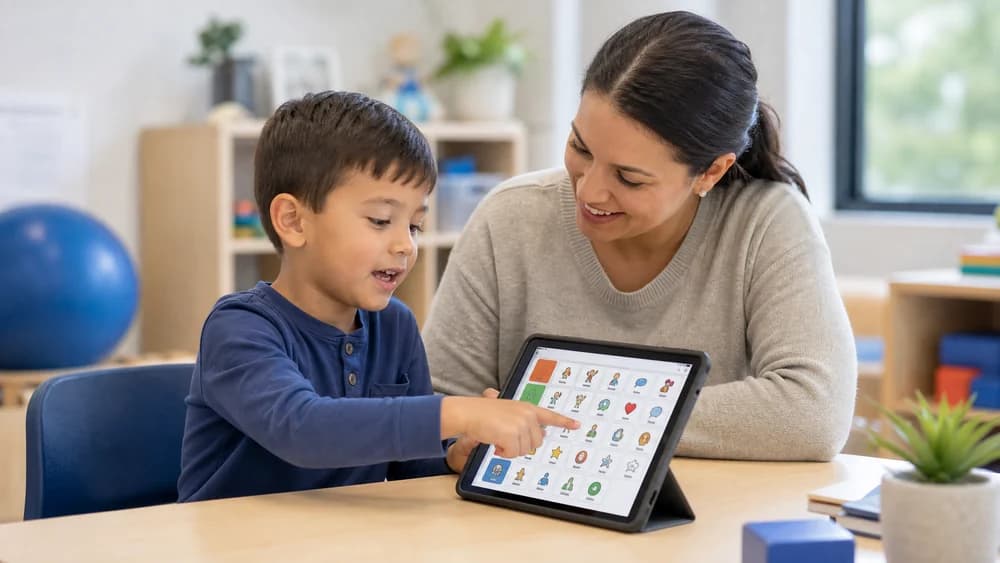
AAC Evaluation and Implementation
We provide comprehensive AAC evaluations and ongoing support so children can access reliable communication across every environment. Services may include:
- Identifying appropriate communication systems
- Evaluating language, motor, sensory, and access needs
- Completing comprehensive AAC evaluations
- Customizing vocabulary and communication systems
- Supporting implementation at home, school, and in the community
- Coaching parents, caregivers, educators, and other professionals
- Supporting AAC use for Gestalt Language Processors
- Ongoing consultation and system adjustments

Sensory Regulation and Communication
Sensory processing and regulation significantly affect a child's ability to engage, communicate, participate, and learn. We use sensory-informed strategies to help each child reach their own optimal learning zone. Support may include:
- Sensory regulation strategies
- Movement-based activities
- Environmental modifications
- Visual supports and predictable routines
- Adaptations to reduce sensory overload
- Identifying activities that increase engagement
- Support for emotional and cognitive self-management
- Collaboration with families and occupational therapy providers
Comprehensive services
Every pediatric speech and language need
Alongside our specialized areas of focus, we provide evaluations and individualized therapy across the full range of pediatric speech and language needs.
Articulation and Speech Sounds
Evaluation and therapy for children who have difficulty producing speech sounds clearly or being understood by others.
Receptive Language
Support for children who have difficulty understanding language, following directions, or processing spoken information.
Expressive Language
Support for children who have difficulty using words and sentences to express their thoughts, needs, and ideas.
Fluency and Stuttering
Evaluation and therapy to support comfortable, confident, and effective communication for children who stutter.
Comprehensive Evaluations
Evaluations may address speech sound production, receptive and expressive language, social communication, fluency, functional communication, Gestalt Language Processing, and AAC needs.
Parent Consultation and Education
Coaching and consultation so the strategies that work in therapy carry over to home, school, and everyday routines.

Meet Mary Pennell, M.Ed., CCC-SLP
Lead Speech-Language Pathologist
“I strongly believe in advocating for each child's individual needs, strengths, and rights.”
As a certified Speech-Language Pathologist, Mary has extensive experience providing school-based services, teletherapy, supervision and mentoring, AAC support, and intervention for Gestalt Language Processors. Mary earned an undergraduate degree in Communication Sciences and Disorders from Penn State (We Are!) and a Master of Education in Communication Disorders from Valdosta State University.
Mary's advanced training includes the Inside Out Sensory SLP Certification, Natural Language Acquisition, AAC for Gestalt Language Processors, and Dynamic Assessment of Social-Emotional Learning.
Mary is passionate about neurodiversity-affirming care, executive functioning, and helping children and families access the support, accommodations, and communication tools they need to thrive, and strongly believes in advocating for each child's individual needs, strengths, and rights while collaborating with families, educators, and other professionals.
Outside of work, Mary enjoys spending time with daughter Ava, two Great Pyrenees pups, and a black cat named Binx.
Across every service
We do not treat a test score
Whether a child is here for articulation, language, stuttering, autism-related communication needs, Gestalt Language Processing, or AAC, we consider the whole child. We take into account:
- Regulation and sensory needs
- Confidence and emotional well-being
- Communication preferences
- Individual strengths and interests
- Family priorities
- Participation across everyday environments
We work to understand each child as a whole person and build meaningful goals that support communication in daily life.
The key message
The optimal learning zone is different for every child.
When children feel regulated, connected, and understood, they are better able to engage, communicate, think, and learn. Our role is to meet each child where they are, build on their strengths, and create meaningful opportunities for communication through play, connection, sensory support, individualized intervention, and fun.
Where therapy happens
In our two clinics
Houston
2200 North Loop W, Ste 102
Houston, TX 77018San Antonio
901 NE Loop 410 Ste 405
San Antonio, TX 78209
How to start
Book a call and we'll talk through your child's communication, answer your questions, and schedule an evaluation if it's the right fit.
Prefer to talk? Call (346) 521-5992
Questions? Email speech@neuroinspirecenter.com
Insurance & payment
We accept insurance, and coverage varies from plan to plan. Call us and we'll help you check your benefits before your first visit. Private pay is available too, with the same flexible options we offer every family.
Every child deserves to be understood.
Tell us about your child and we'll tell you honestly whether we are the right fit. No pressure, no guesswork.
Get started
Tell us about your child
Send us a note and our team will reach out to talk through your child's needs and the right next step. Prefer to talk now? Call (346) 521-5992.